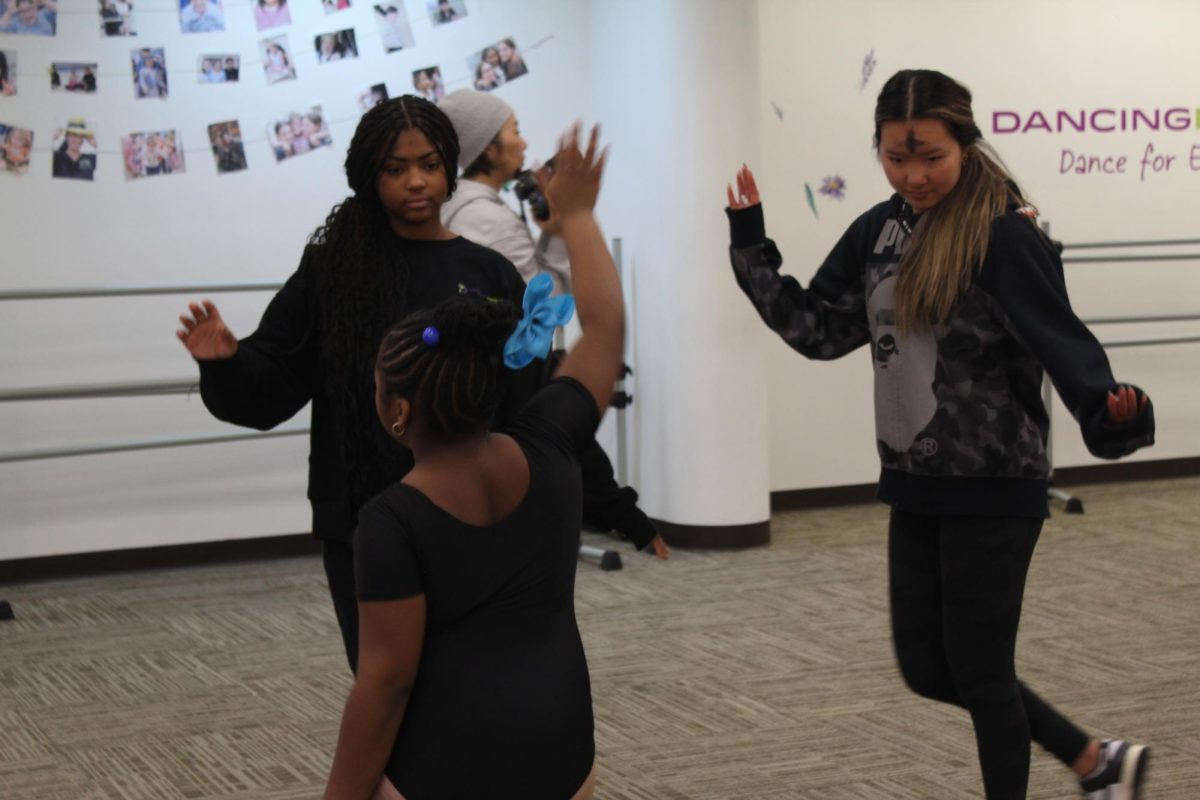
Soft music fills the dance studio as dancers move with energy and joy. Costumes for an upcoming performance are scattered across the floor, each piece representing the different cultures of the dancers. For these performers, dancing is more than movement. It is the realization of a dream they once believed was out of reach. Through Dancing Dreams, children with medical or physical challenges are given the opportunity to attend dance classes and perform. The organization’s motto reflects that mission: “Everyone pliés, they just do it in their own way.”
“We just had a little ballet bar in my office for kids to practice standing and walking,” said Joann Ferrara, founder of Dancing Dreams. “I said to her, ‘Oh, you’re like a ballerina,’ and she just looked at me at four years old. She had cerebral palsy and said, ‘I wish I could be a dancer, but nobody wants me.’”
According to Ferrara, Dancing Dreams began “on the spur of the moment,” growing from a small dance space in the back of her office into a welcoming studio for children who previously lacked access to dance because of their disabilities. The organization was inspired by the young girl who believed she could never dance.
“We have children who are in wheelchairs and really can only move one arm,” Ferrara said. “We have children who don’t speak. We have children who are very chatty. We have children who use crutches and wheelchairs.”
Dancing Dreams prioritizes equality and inclusion, creating an environment where every dancer feels safe and valued.
“I fell in love with it because I saw so many other people my age who had similar conditions or completely different conditions than mine just enjoying their time,” senior dancer Leah Zelaya said. “It continues to empower me, and I know it empowers so many other people.”
As the studio has grown, it has continued to inspire dancers to see themselves in new ways, building confidence and a sense of belonging that extends beyond the studio.
“She’s just so supportive because dancing has taught her so much,” Zelaya said. “She’s been patient and always there for me. She feels like a sister.”
Dancing Dreams has helped dancers like Zelaya build friendships with peers, volunteers, and teen helpers. Volunteers also form close bonds with the dancers and the community.
“Seeing them develop and grow,” volunteer Robin said. “Even in the short time I’ve been here, I’ve seen kids come out of their shells. That’s incredibly rewarding.”
This diverse community creates a safe space where dancers feel they belong, empowering them socially and emotionally. Many children involved in the program become more outgoing and confident.
“One of my favorite times is backstage before the show when it’s just the dancers,” Ferrara said. “Helpers are putting on costumes and makeup, and there’s so much excitement.”
Dancing Dreams hosts multiple performances throughout the year. Its upcoming annual dance show will feature this year’s theme, We Are the World, celebrating the dancers’ different cultures and languages.
“We have dances that celebrate everybody’s heritage,” Ferrara said. “It starts with a song called ‘Journey,’ which represents our journey to learn everything.”
For many dancers, performances are among their most meaningful experiences.
“That was such a dream come true for me, to dance on that stage,” Zelaya said. “I was really nervous at first, but seeing the audience enjoy themselves empowered me to just have fun.”
Although dancers often feel nervous before performances, many say they remember why they are there: to enjoy dancing alongside the people who have supported them throughout their journey.
“I think it’s important to break those stereotypes,” Zelaya said. “When I see someone with a disability pursuing what they love, whether it’s academics or the arts, it’s beautiful. It shows that people with disabilities have the power and capacity to follow their passions.”
While harmful stereotypes about disability still exist, Dancing Dreams challenges those assumptions every day. Many dancers achieve personal and artistic goals, with the organization playing a key role in their growth.
“For us, we hope people learn that dance is not just for able-bodied people,” Ferrara said. “Everyone can dance. They just do it in their own way.”