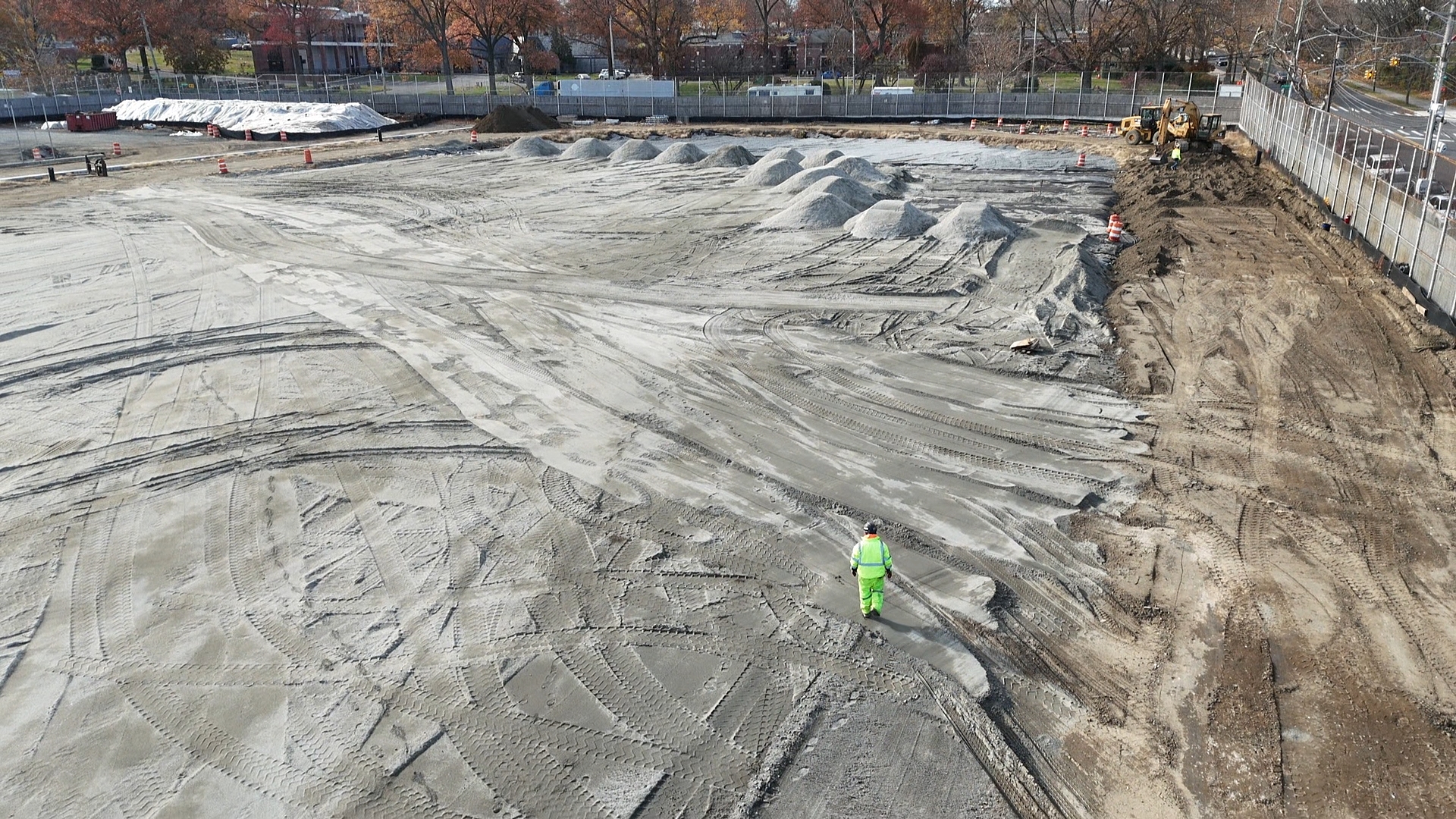
The once-bustling sports field at Francis Lewis High School has faced ongoing delays, leaving students, athletes, staff, and parents without access to a central campus facility for multiple school years. Although the field’s turf has needed replacement since around 2015, the renovation project has officially been underway for nearly two years. About $12.5 million has been allocated for the long-awaited field renovation, with $10 million of that funding secured three years earlier with the help of the Borough President and City Council. Despite this funding, little visible progress has been made.
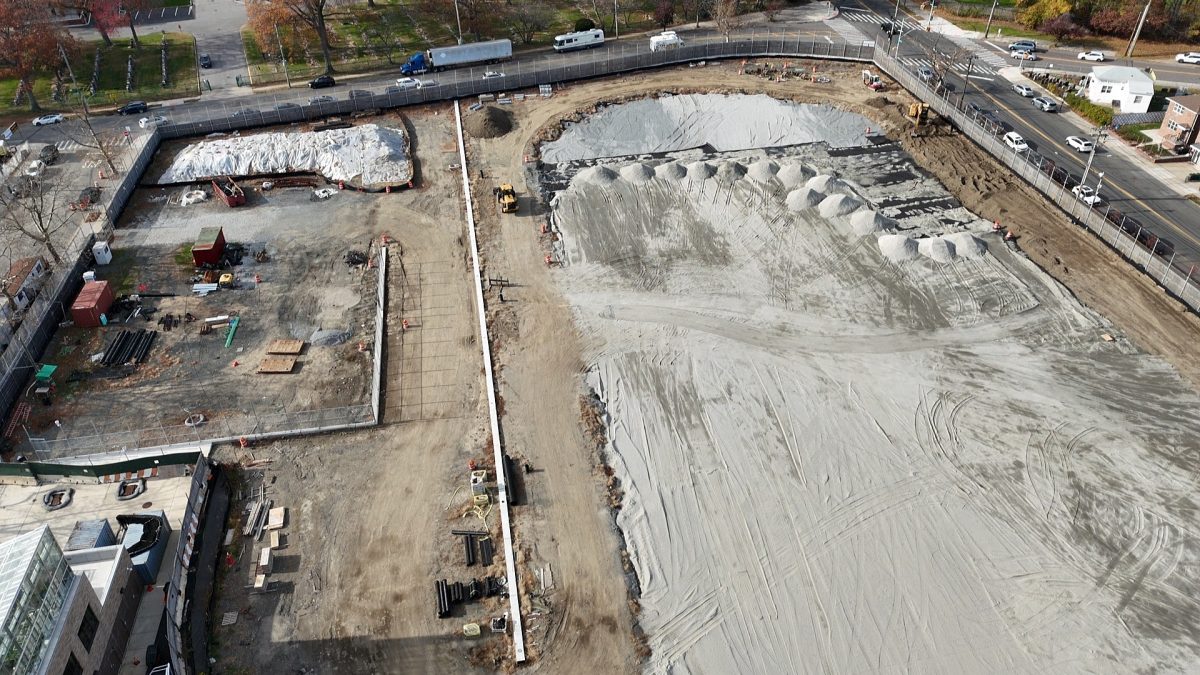
The project’s official proposal for starting up was around October 2023, with the expectation that it would be fully refurbished by approximately March of 2026. Repeated pauses and limited visible activity have pushed back expectations for completion. The lack of consistent progress has forced the school community to adapt while uncertainty remains over when the field will be finished. These stops have changed the trajectory of sports for athletes, making coaches having to go beyond typical efforts of finding alternatives to the convenient track, all while leaving them hoping and questioning when the field will truly be finished.
The Field Before Construction
Prior to construction, the field hosted many school events, including pep rallies, Walk for Water, PSAL games and practices, and outdoor physical education classes. These activities took place across the track, baseball fields, handball courts, and tennis courts, which had several safety concerns. Unaddressed issues such as cracks and poor drainage in the turf created hazards for students and staff who used the space.
“There were times when the field just wasn’t in usable condition,” Coach Brian Brown said. “It made practices and events harder to run safely.”
Because of these issues, the school lost access to the field, which has greatly limited the number of activities it is able to hold.
“Normally, half the classes are inside and half the classes are outside, and if it’s really nice outside, sometimes they all go outside,” FLHS Principal Dr. Marmor said. “So what the kids are really experiencing is being confined, because we don’t have the fields for phys-ed. Everybody, all the classes, are stuck indoors.”
During the spring semester, students remain indoors for physical education classes instead of being outside on the field. Dr. Marmor compared the situation to experiencing an extended winter.
“When we get to the snow and the deep winter, we know everybody has to stay in when there’s four or eight inches of snow outside,” Dr. Marmor said. “We have plans for how to handle those snow days, but it’s been the equivalent of us having two years of snowstorms.”
Time Line Of Project
The duration of the project planning began roughly several years ago, with funding secured in phases through City Council and Borough President capital allocations. According to Dr. Marmor, full funding was reached before construction officially began, but work has not progressed steadily.
Multiple periods with no work being done is worrying since the anticipated time period for completion is just about March of 2026, which must be met according to the SCA’s standards.
“I have been concerned about the lack of activity out there,” Dr. Marmor said. “We would frequently see a very small number of workers that were out there and a small number of trucks. And I did raise those concerns to the School Construction Authority.”
According to Dr. Marmor, updates about the construction have mostly been shared verbally during monthly meetings. Because there has been no official explanation for the first stoppage, many students and staff remain confused about why work has paused at different points.
“There’s no real date because it only stops when we notice,” Dr. Marmor said. “It also might have started before we noticed, because the one thing that I’m saying is we have not been getting a lot of official notification of stops and starts, so it’s all kind of been our observation.”
Due to the lack of activity in the project, and the shortage of transparency about what’s happening and what will happen in the future. Dr. Marmor suggests how having no field has restricted students’ full potential.
Possible Causes of the Delays
Explanations for the delays have not been formally confirmed by the School Construction Authority. Dr. Marmor said he has been told that issues related to drainage, permits, or coordination between agencies may be contributing factors, though he emphasized that these explanations have not been officially verified.
PTA President Linda Lovett said she has also heard explanations regarding project complications but noted that key details remain unconfirmed.
“What I’m told, and I haven’t confirmed this yet, is that there was a law changed in the middle of construction, possibly related to drainage, and the project wasn’t grandfathered in,” Lovett said. “But we’re still trying to get more information on what the real issue is.”
In an effort to obtain records and materials related to the construction project, FLHS News submitted Freedom of Information Law (FOIL) requests to both the School Construction Authority and the Department of Environmental Protection. The School Construction Authority acknowledged the request but did not provide the materials. At the time of publication, the Department of Environmental Protection has not responded. With no official explanation from city agencies, FLHS News reporters also spoke with construction workers on site to learn more about the situation.
“They have delays with the architects, engineers, and the designs,” said Michael Corcomellis, an emergency electrical contractor. “Once you have something on paper and then you actually come to the job and start digging and surveying, things are not always like what’s shown on the drawings.”
Corcomellis personally believed the project could take about another year, but said he does not oversee the project or set its official timeline.
Drone footage by Mikayla Khuu
Impact on Athletes
Without access to the school field, athletes have not been able to practice or hold home games on campus. As a result, coaches and athletes have had to reserve space at local parks, most commonly Cunningham Park. This has led to longer commutes and less time to practice.
“We don’t really have home games anymore, so every time we have a game, we’re always traveling,” Francis Lewis junior and soccer athlete Phoebe He said. “We also have to travel to our practices, usually like a 15-minute walk, which cuts into our practice time.”
The loss of the field has also led to increased lateness for practices and games across several sports teams. For example, the FLHS softball team is required to be at practice by 1:30 p.m., but many players have to walk or take a bus to off-campus locations, which affects how much time the team has to train together.
“Since it’s a drive or a walk away, and some people have to take the bus, obviously they’re going to be late, and that’s not good for the team.” Francis Lewis junior and softball player Victoria Parungo said.
Coach Brian Brown said teams have tried to adapt, though the absence of a track limits certain types of training, especially speed and interval work.
“Not having a track, we’ve had to deal with it by using concrete sidewalks or going to Cunningham Park,” Brown, the cross country coach, said. “We’ve learned to adjust, but hopefully the juniors, sophomores, and freshmen will be able to get on a track at some point before they graduate.”
Students also expressed concern that they may graduate without ever seeing the finished field.
“It’s been going on for so long,” said Francis Lewis track athlete Sophia Wu. “When I got here as a freshman, I was really looking forward to using the track, but now I don’t think it’s going to be finished by my senior year.”
Dr. Marmor echoed these concerns and said he worries about what continued delays could mean for students who are nearing graduation.
“It looks as though we may wind up having a student who came here as a freshman and left as a senior and never have seen a field.” Dr. Marmor said. “If that day comes where a student has actually spent their entire four years here and has never once seen the field, that’s sad. And we’re very, very much trying to prevent that.”
Parent and PTA Response
Parents and community members have raised concerns about the field delays, especially about how the absence of a completed field could affect student experience and future enrollment at Francis Lewis.
“It’s definitely going to be affecting parents not wanting to send their kids here,” PTA President Linda Lovett said. “Even though the school is amazing and has so many different programs, not having a field takes away from all the things we have to offer, especially for a school this size.”
In response to the delays, the PTA formed an action committee to look more closely into the issue and explore possible ways to push the project forward.
“As PTA president, we actually started an action committee to look into it,” Lovett said. “First, we need to understand what the real issue is with the field.”
Lovett said the committee is exploring whether unresolved permit or drainage issues may be contributing to the delays and is considering reaching out to local politicians for support.
“The action committee has a lot of insight with the politicians in the area,” she said. “They have a lot of pull in different communities because we’re such a large school. We’re going to make some calls if we have to.”
Dr. Marmor acknowledged parents’ frustration and said he feels a strong sense of responsibility for the ongoing delays.
“I do know that the parents are getting involved, even though I understand that this is really my responsibility,” Dr. Marmor said. “I feel very guilty, and I feel like to some extent I’ve let the school down by having this linger.”
What Comes Next
With the project continuing at a slow pace, Dr. Marmor said outside pressure may help bring more attention to the delays. He encouraged students, parents, and community members to contact local elected officials.
“I think at this point, the best thing that anybody could do, whether it’s a student, a parent, or both, would be to complain to your local city council people or your local assembly people,” Dr. Marmor said. “I’m already full of complaints, so complaining to me doesn’t really help the situation. But contacting politicians who support our school certainly couldn’t hurt.”
Dr. Marmor said he hopes the project will be completed soon and believes students will ultimately benefit from the finished facility.
“I’m doing the best that I can, but it has not been enough.” Dr. Marmor said. “And I’m going to continue to try every single day to try to get this project completed, get you the beautiful facility that you deserve, and then put this kind of confinement to an end.”