Black History Month is an annual observance that celebrates the history, achievements and contributions of African Americans in the United States. At Francis Lewis, Black History Month is celebrated in many different ways, including coordination with outside organizations like ASALH (the Association for the Study of African American Life and History), which selected a theme for its 100th year celebrating Black History Month.
This year’s Black History Month event at FLHS was a gallery walk that featured the contributions of Black Americans spanning from the 1920s all the way to the 2020s. Various eye-catching stations were set up for different decades of Black history, sparking bustling conversations throughout the gym and genuine admiration for the figures on display. Students stayed engaged throughout, and the vast displays served as a reminder that the contributions of Black people are integral to American history.
Ms. McGuirk, the social studies assistant principal, played a central role in facilitating the event as one of the main organizers, alongside Ms. Gattung, Mr. Sutherland and Ms. Linge. McGuirk noted that the structure of this year’s event was meaningfully different from last year’s.
“So our goal this year was, rather than doing two class rotations, which we did in the past,” Ms. McGuirk expressed. “We wanted them to be able to visit more stations because we felt like they were limited in what artwork, artifacts, information they could see.”
Chen Yi Zou, a Constitutional Law student who helped organize the event, highlighted the interactive elements of the fair and the variety of media available for students to explore across different decades.
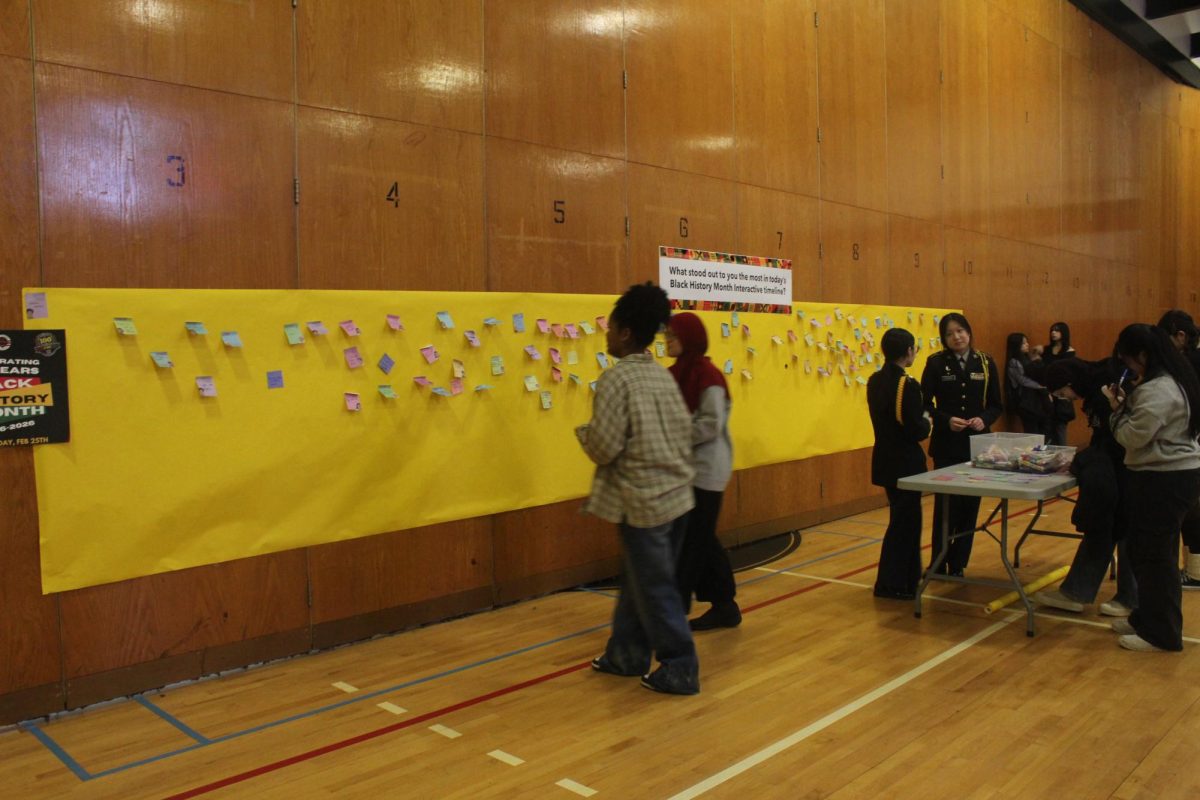
“I noticed, unlike the past academy fairs and events we had in the gymnasium, the dividing wall was up so that we can have a reflection wall, which is the interactive element of the event.” Zou said. “The thing that stood out to me most was the law academy’s influence in this event, since they featured their own constitutional law leaders.”
McGuirk also addressed a concern from previous years: that the gallery walk had felt like just another assignment, with worksheets reducing students’ freedom to genuinely explore. This year, the social studies department made a deliberate effort to change that.
“I think in the past with some of these events we would give the students a handout, and it kind of felt like busy work,” McGuirk said. “The thought process going into this year was to sort of remove that, let the students experience it more like a gallery or a museum, and then give them the space to reflect on it personally.”