


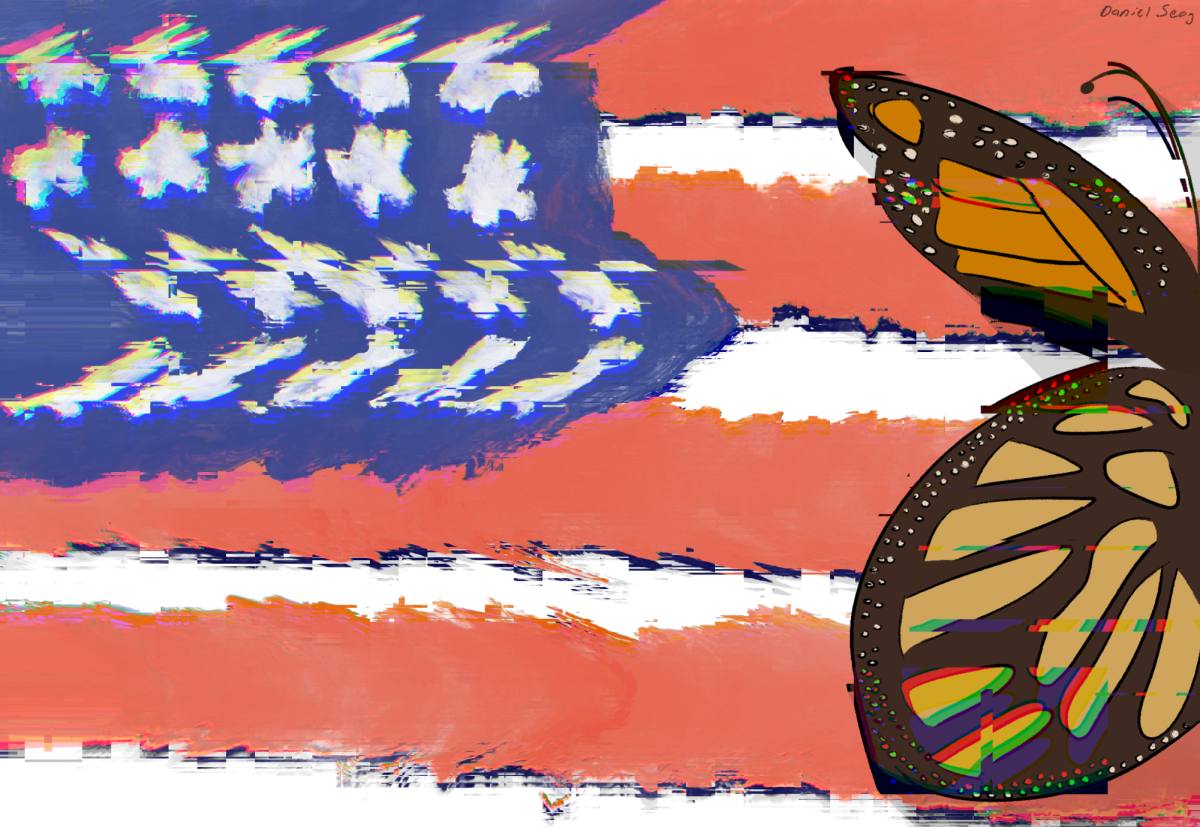
On January 20 and 21, 2025, President Trump declared a national emergency and issued several executive orders related to immigration. These actions addressed issues including enhanced vetting of visa applicants, birthright citizenship, border security, and refugee programs. The announcement raised concerns nationwide, including within the Francis Lewis High School community, where students and families are directly affected by these policies.
“My issue with it is that it doesn’t seem like they’re following due process and allowing people to have their day in court to determine whether or not they should be deported,” English teacher and dean Ms. Silva said. “At first, the messaging was about removing ‘bad people,’ but now it seems that being ‘bad’ can also be equated with exercising First Amendment rights. That is very concerning.”
Immigration enforcement actions have caused anxiety among families who fear being affected by ICE raids. In response, many families have begun discussing emergency plans.
“I think a lot of students and their families have actually sat down to talk about what their plan would be if something happened,” ENL teacher Ms. Guzman said. “That is being proactive instead of reactive. Some students are thinking about where they would live if their parents were detained, whether they would stay with relatives, and how they would manage financially.”
The increased enforcement has had a noticeable impact on students at Francis Lewis. Many students report learning about immigration actions through social media platforms, which has added to confusion and fear.
“I heard about ICE and immigration mostly through social media,” said a freshman student who wished to remain anonymous. “I saw a lot of videos on Instagram and RedNote about raids and deportations.”
Junior Emilie Coote expressed concern about the way immigration enforcement is portrayed online.
“I mostly see it on Twitter,” Coote said. “I’ve seen posts from the White House that seem to make deportation into something casual or even entertaining, which is disturbing. A lot of what I see focuses on how these actions go against constitutional rights, especially when it comes to people who were born here or are children of immigrants.”
Junior Jojo Lin Zheng shared her reaction to ICE activity reported near Francis Lewis.
“I think it’s really horrible,” Zheng said. “There is a policy that restricts ICE from operating near schools, hospitals, and churches. Now that policy might be revoked. Schools are supposed to be safe places, especially for immigrant students.”
Immigration status and related protections have historically been discussed in ENL and ESL classrooms, particularly policies like Deferred Action for Childhood Arrivals, known as DACA. DACA allowed undocumented students to pursue higher education without disclosing their status.
“In past years, I taught lessons about undocumented immigration and students felt safe sharing their experiences,” said an ENL teacher who requested anonymity. “Now, students feel less secure and more hesitant to talk about their status. I would no longer feel comfortable teaching that topic because of the fear it creates.”
The uncertainty surrounding DACA has increased anxiety for students preparing for college.
“The last time President Trump was in office, DACA was repealed,” the ENL teacher said. “My students are worried that this could happen again. Everything changes so quickly, and we don’t always have accurate information. What matters most is that students feel safe at school.”
Many students say they are affected by immigration policies even if they are citizens, because members of their families are immigrants.
“My grandmother is an immigrant,” senior Jovianna Roopchand said. “She came here from Trinidad without a college degree and worked hard to give her children opportunities. Because of her, my mom and I were able to have better lives. America was always presented to me as a place of opportunity, and now that idea feels uncertain.”
Teachers have noticed heightened anxiety among students in recent weeks.
“There has been a lot of fear,” Ms. Silva said. “Some students stayed home because they were afraid their parents might be taken away. Others believed their families might finally gain citizenship, only to become worried again. It’s frightening, especially when people fear being detained in places where human rights are not respected.”
Students also expressed concern about how immigration enforcement may shape the future of the country.
“It feels like everything is changing,” Roopchand said. “Instead of citizenship being seen as a blessing or opportunity, it feels like it can be taken away based on skin color or where someone is from. It makes me question where I belong.”
Junior Andrew Vil shared similar concerns.
“I think what’s happening is morally wrong,” Vil said. “Mass deportations without due process are unconstitutional. I’ve even heard of legal citizens being deported because ICE assumed they were undocumented.”
In response to growing confusion, Zheng created an Instagram account called legally.you to share information about legal rights.
“I wanted people to know what they can do if ICE ever shows up,” Zheng said. “There are ICE ‘Know Your Rights’ cards that families can print and keep at home. When I saw how close enforcement activity was to where I live, I realized many people didn’t know what to do. That’s why I started the page.”
Despite fear and uncertainty, some educators say the situation has strengthened the school community.
“One thing my students pointed out, which I thought was beautiful, is that this has brought our community closer together,” Ms. Guzman said. “People are protecting each other and supporting one another, regardless of background. That sense of unity is something meaningful to see.”


